What I Learned This Week on the River - Episode #2

Already two weeks in and I am wishing I had named this feature something else.  But alas I feel the need to stick to my guns.  

I only made it out once this week, but it was an amazing outing.  The fishing was outstanding.  I guess the tip I can pass along here is that if you look out your window and it looks a little damp and cool, leave work ASAP and head to the river.  Those little bugs we refer to as Blue Wing Olives seem to love these conditions, and thus so do the trout.  And no, I won't be held responsible for whatever consequences your receive from skipping out on your job. 

Last year I wrote up a little piece that I posted on my "Getting Out" blog but don't think I ever posted it here about the joys of spring, and BWO's.  Hey at least I didn't steal it from someone else right?  So week 2 and I am already taking the easy way out, but it is timely.

Cut...

Paste...

Action...

The Joys of Spring, BWO's, and....Popcorn?


I will admit in the past Spring has never been my favorite season.  I know the ideal image of spring brings to mind thoughts of fresh sprouting green grass, soft gentle rains, budding willows, and freshly bloomed daffodils, but it seems that the reality is often closer to dull gray skies, harsh winds, and sticky brown mud...everywhere.   Okay that may have been the pessimist in me coming out.  But in the past I have always felt that Spring was a bit overrated as a season, and just a necessary transition that must be endured until summer finally arrived.  As a fly fisherman though I have garnered a whole new found respect for that formerly overrated season, thanks to one tiny bug.  The Blue Wing Olive.  

A freshly hatched BWO rides along the calm surface.

The reality is that BWO's can have a presence throughout the year, and make a strong reappearance in the fall, but their spring time arrival is about as welcome an event as you can have for both fly fishermen and fish alike.  Other hatches get all the hype, but these little bugs can make fish go bonkers, and in weather conditions that used to rank right up there with the reason I felt spring was over rated, these bugs flourish.  If you ask me now what days in the spring I look forward to it would be a fairly cold 45-50 degree day with overcast skies spitting a few rain showers, with even a little breeze thrown in.  Of course not enough of a breeze to make casting a fly rod difficult, but just enough to push those little sailboat profile mayflies around on the water, and concentrate them between a swift current seam and a grassy bank.  Natures way of creating an all-you-can-eat buffet for hungry trout coming off a cold lethargic winter of snacking on whatever requires the least amount of energy to get to.


As I stood in the midst of a frenetic river last week watching one of the most amazing hatches of Blue Wing Olives come off, it reminded me of watching popcorn, except, unless you really like popcorn, a bit more exhilarating.  There is the quiet calm where the kernels sit quietly in the slowly heating oil.  It can be hard to tell when this stage starts as all the action is underwater, hidden from the anglers eye.  It may look like the water is quiet, but underneath  the surface things are starting to happen.


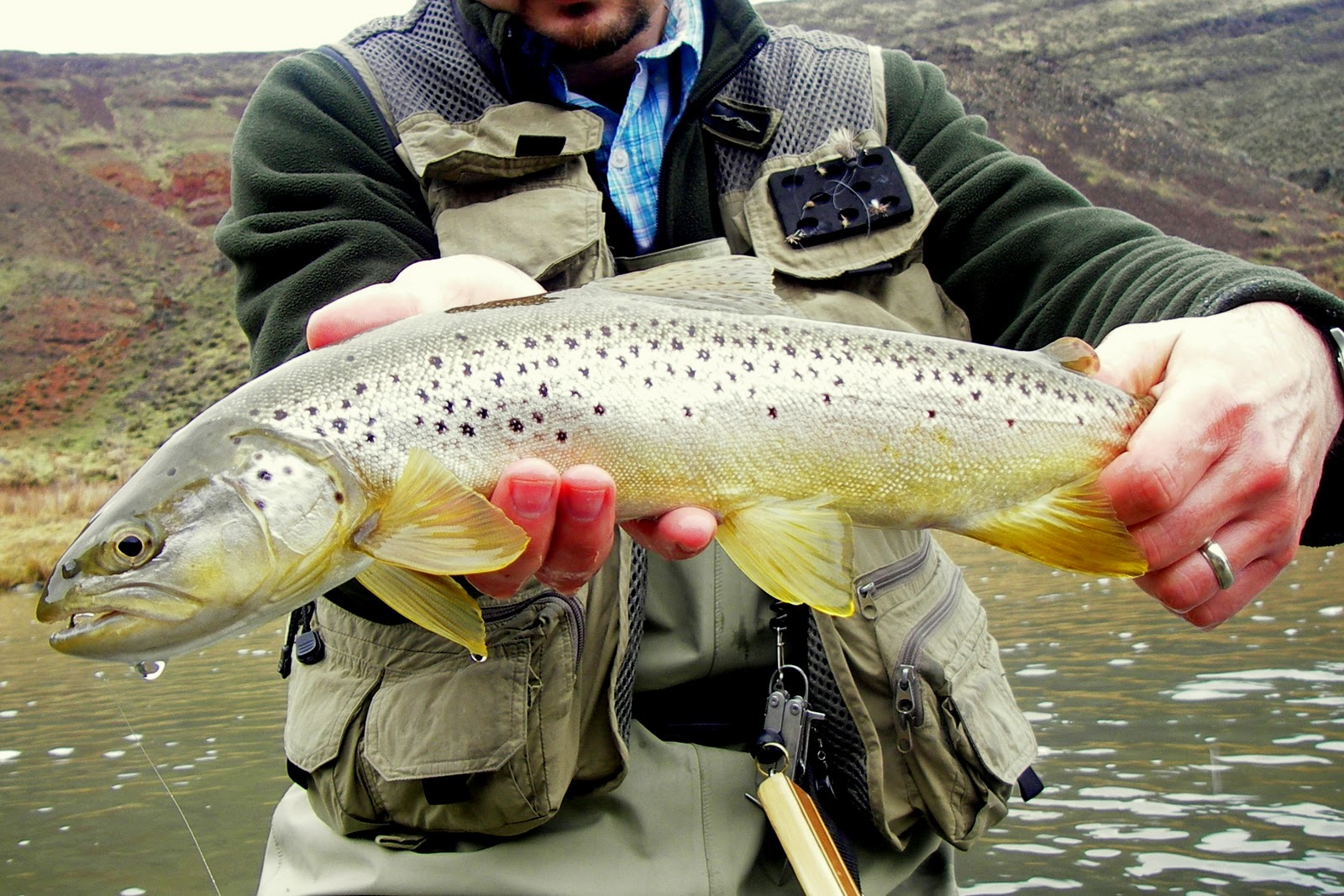
A nice fish that came early in the hatch on an early stage emerger pattern.
Then the oil starts to sizzle and pop.  Like when you start seeing those first few intermittent rises.  Usually just dorsal fins, or tails as the fish take the rising nymphs as they head for the surface.  Things are getting more heated now.  And the first kernels are starting to crack.   You hear that first pop in the pan, or you see that first dun on the surface gliding slowly along drying it's wings.  A fish here and there begin rising for emergers, and  a couple are even up on the few duns floating down river.


This fish fell for a more standard upright wing pattern mimicking the BWO Dun
Suddenly, like that moment that the kernels begin exploding, not one at a time, but  at a constant thunderous rate, things get bananas.  In that run you could have sworn was void of any fish just minutes before there are more rises than you can count.  One look at the water and you see exactly why.  The evidence is littering the surface as the small sailboat profiles are everywhere.  Where once a sporadic bug or two drifted alone, there are literally hundreds...no thousands!  It gets crazy.  You hope this crescendo lasts for a while.  The fish are going nuts and so are you.  In the right conditions (see my new favorite spring weather above) this stage can last quite some time, and when it does I count my lucky stars or what ever that saying is.


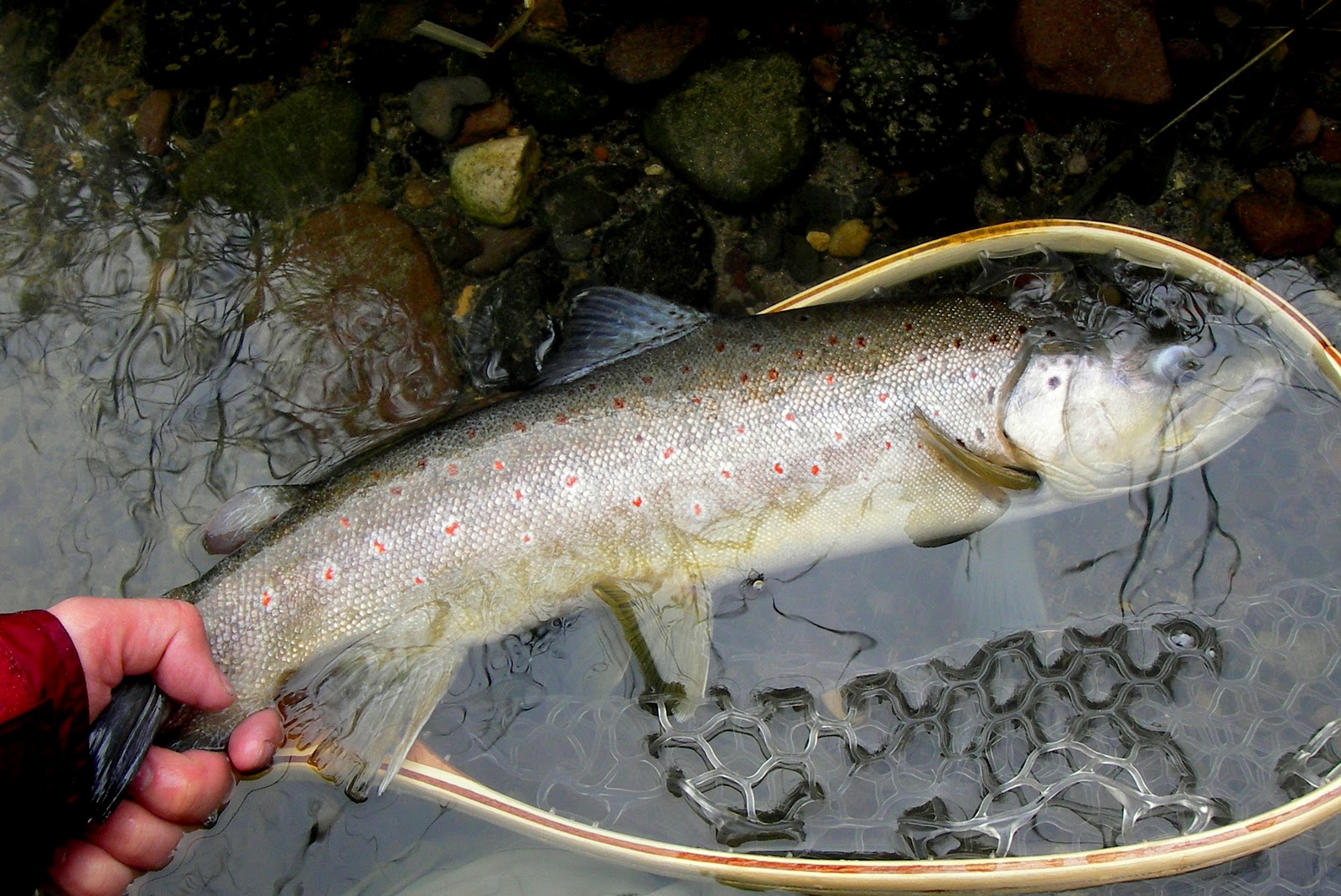
One of those fish spotted after the hatch sipping cripples that collected along a shallow grassy bank.
Then just as quickly as they started popping things subside.  Again you can only see a couple duns drifting on the surface.   Some of the stragglers, like those half popped old maids in the popcorn bowl, are struggling to make it off the water.  Something has happened in  this process for them and they aren't going to make it.  Like those old maids that settle  and collect in the bottom of the popcorn bowl, these wounded and battered bugs get pushed helplessly by the current into protected pockets or up against a grassy bank where they become more concentrated.  Much of the surface activity has subsided as well, but a few of the wiser and larger fish are still around.  Tucked into those little nooks where those crippled and half drowned mayflies have been rounded up against their will they sip away quietly.   It's the tail end of the action, but the careful eye of an observant angler knows there is still action to be found in seeking out these protected areas and keeping a keen eye out for those stealthy rises.  Then the river is quiet, waiting silently for the next out burst. 


I am not an entomologist by any means.  I just know I love to watch a good hatch develop and reap the rewards that come along with it.  There are plenty of frustrating moments in this process for myself. But it is what keeps me coming back.  If things were always easy, then what would be the point?  These BWO hatches have given me some great study material this spring.  I have learned, and I have gone back to the drawing board.  Many times, but it's all part of the process.


What I Learned This Week on the River - Episode #1

Most weeks I get out fishing at least once. And every time I go I learn or in some cases relearn something. So I hope to pass on these little items on a somewhat weekly basis. These tips can be about pretty much anything related to fly fishing and some may help you, some may not. Take them for what they are worth.

So on to this weeks items.  Two things happened that were "light bulb" moments when I was on the water this week. Lets start with an, "oh duh" moment to establish that I can be pretty blockheaded at times.

 #1)For a long time I have fished with fly patterns that use CDC and thus my favorite floatant to carry on the water is of the powdered desiccant variety, such as Frogs Fanny or Doc's Dry dust. These types of floatants do a great job with CDC, but  when you open the bottle and apply it to the fly, the fine powder tends to stay airborne a long time. To avoid inadvertently breathing any of this stuff in, which I can't imagine would be good for you, I have always turned my back to any wind or breeze, and applied the powder to the fly, thinking the breeze would carry the powder away from me. However, I still managed on occasion to somehow breath a little in and it was getting old. Finally I realized the swirling current coming around my back was not always carrying the powder away from me but in fact sucking it right back into me. I was creating an eddy and we fishermen know what eddies do.  Well ***ding*** the light bulb went on yesterday, and I figured out that the best way to make sure the excess powder gets blown away from me is to turn sideways to the wind when applying this product to a fly. It works much better.

Well now I feel silly as that was probably pretty obvious, but my lungs thank me today for finally thinking of this.

#2)Now on to an a actual fly fishing item. Fish can be feeding in a spot, but it's good to ask yourself, where is the food they are eating coming from?  Another pretty obvious tip, but one that is good to remember on the water, so I don't feel bad bringing it up. Here is what I mean by that.

Exhibit A

Refer to the above rudimentary drawing to visualize this scenario.  This week I was fishing  to a lonely riser that was feeding in the very center of a 2 foot by 2 foot area in the midst of three boulders in the stream. My only real approach to the fish was from the rear right of the fish, just because of the way the rocks were situated. Because I had this defined area that the fish was in, between these rocks, I just assumed that any fly that flowed through this area would be on the fish's radar. The way the rocks were situated, and the way I had to approach the lie, the easiest way to fish this was going to be to cast just to the right of Rock 1 in the picture, and let the current push the fly through the middle of the area. It seemed logical that if the fly floated right through the center of the area the fish was rising there was a good chance it would see my fly and hopefully rise to it. After making several fruitless casts I wondered about my fly selection, but as is usually the case, it is often more about our presentation than it is about the fly we are using, so I stuck with it.

Then I noticed that while the fish was in fact feeding in the middle of this area, where my fly had been floating directly over, there were two currents coming together here, and it occurred to me the fish may be positioned to feed on bugs coming from the current pushing off of the left shoulder of Rock 2 (again see above picture). I had cast to the current flowing off the lead rock because it was easier to get my fly drifting from there, to where the fish was feeding, and this current coming from the right was a much tougher cast. The window of where my fly could land without spooking the fish on one side, and getting caught up on Rock 2 on the other side, was much smaller. It was worth a shot though.  I loaded the rod and some how managed to drop the fly in that little window on the first cast, and sure enough the fish was all over it. Lesson learned, or relearned, and I will probably have to be reminded of it again one of these days.

It was a rewarding week on the river and with these reminders I hope we all can keep our lungs clear of "Frogs Fanny" and our flies in the correct feeding lane of hungry fish.

Tight Lines.

Tying the PMD Biot Duck Butt Dun

I am going to put a few instructional videos up here over the next year on how to tie the patterns I have available for sale. It is something a little new for me, so I hope to get some of the kinks of this first video worked out over the next few I do.

I am going to start out with the PMD Biot Duck Butt Dun. It is a great little pattern that I have sold to fishermen here in the west as a PMD, and then a few of our Eastern fly fishers have purchased them telling me they work great on their rivers during a Sulpher hatch.

This pattern has become very versatile for me and it gets taken by fish at a variety of stages during the hatch. From the latter emergence through the dun phase fish will eat this fly. I have even modified it on stream by pulling the deer hair wing out flat to the sides and fished it as a spinner in a pinch. And yes it worked.

If you have any questions, or suggestions feel free to let me know at b.sorenson@jumpcreekflies.com.

Enjoy!

One Full Year in Business, A New Pattern, and Some Customizing Options!

A new year on the calendar also means Jump Creek Flies has officially been up and running for one full year! Thanks to all those great customers who have stopped by this past year. This year has exceeded my expectations and kept me busy! There are a few great customers who I have been able to interact with shooting ideas back and forth, and it is this interaction that I enjoy as much as tying a fly. If you ever have any questions, or helpful suggestions on any of my patterns, never hesitate to send me an email at b.sorenson@jumpcreekflies.com. I really like enjoy hearing from all of you. Now on with the new stuff! 

First and foremost I would like to introduce a new pattern. The FT Stonefly is the big, mutated, overgrown brother of the FT Hopper and in the version pictured here works great during the Giant Salmonfly Hatches.
 This fly will float, float float.  It's got a double layer of 2mm foam for the body, and TWO full elk hair Wings as well as an elk hair bullet head.  The pattern is incredibly buoyant and easily visible on the water.  The profile from the fish perspective,  you know, the only perspective that really matters in the long run, is very appealing as well. 

Go to the Dry Fly Catalog to purchase a few of these for as little as $1.75/ fly if you order 6 or more.  And of course shipping as always is FREE!

Now on to some more exciting news pertaining to this fly and also the FT Hopper.  You will find some added options available when purchasing these flies.  I have added some more specific customization options so that these flies can be tied up in any combination you would like.  You can now choose not only the hook size, but the color of the bottom foam layer, and the color of the legs.  I have added these options so that these versatile flies can be modified to meet your needs on your specific water.  For Example, the FT Stonefly mentioned and pictured above can be easily modified to work for other stoneflies by simply changing the colors of the foam and legs.  The stoneflies that hatch on your waters can vary in sizes and color, so I wanted to offer as many options as possible for you to choose what will work best on your waters.  You will find these expanded options available on the FT Hopper as well.  I hope to continue to expand my options for many of these patterns as time goes on and I recieve more input from you, the valued customers, on what colors you might like to see.  For now you can go check out what options are available, and get ready for your local specific Stonefly and Hopper events this spring and summer.  

Hope everyone had a great 2011 and that 2012 holds more time fishing for all of us!


Sunny Day BWO's

I live in a place with four distinct seasons, and for many reasons I am glad for that.  From a fly fishing perspective each season brings new hatches, and a new approach to the rivers and lakes I love to fish.  It seems that every time the seasons change I catch myself saying "this is my favorite time of year to fish."  The changing seasons and their effects on our favorite fishing waters have a way of keeping things interesting.  And it is true that each and every season is my favorite one for fishing.  If asked to pick one, I will pick the current season.

Now since we find ourselves smack in the middle of the fall, and around here that means BWO's in big numbers I figured I would touch on something I have notice this fall in fishing the small baetis patterns.  It is fairly common knowlege amongst fly fishers that some of the worst fall weather is prime time for fishing these bugs as they seem to emerge in prolific numbers during those more adverse weather conditions.  If you are lucky enough to be able to pick and choose last minute the days you are going to fish, it may be no problem to wake up, look out the window, see perfect BWO conditions and make the decision then and there that you are going to hit the water.  But for others that may not be so lucky, it will invariably happen that the day you can fish is the brightest sunny day of the fall, and is not so ideal for a large BWO emergence.  However BWO's still hatch on these days it just may require a little more effort to find them, and to find the fish up feeding on them.

It seems that the hatches are a bit shorter lived on those sunny days, but they do exist.  From my experience it may happen a little earlier in the day than it would on the nastier weather days, but not always.  It will require a little scouting and moving around, but often the bugs and the fish rising to them can be found.  When I get to the river on those bright sunny fall days the first places I will look are the portions of river that will be the first to be shaded by the afternoon sun.  I don't necessarily know if the sun is an aversion to the bugs themselves, but I do think that the fish will be more likely rise for the bugs if the glaring sun is not beating down on the water.  

For example on a recent trip to a favorite fall river in the area on one of these sunny days I drove into one of my favorite fall holes, that fits the description I am talking about.  It is a perfect BWO run.  A nice moderate riffle, a perfect place for a BWO nymph to live it's pre-dun life feeds into a long, slow, and deep run with a lot of scattered boulders and structure.  The bugs hatch up in those riffles then the sailboat profiled duns drift slowly along the slower stretch attempting to dry their wings enough to be able to take flight.  The fish will often be here picking off duns, but also looking for any of those less fortunate bugs that have had difficulty emerging.  Helplessly they too float along the current, powerless against the river, or the fish that lurk below.  These cripple and stillborn bugs provide an easy target and the fish know it, and will seek them out.

This run also happens to but up against a steep hill side that casts a shadow on the river very early in the fall afternoon.  On this particular day as I arrived at the run I jumped out of the truck and pushed through some bank side brush to get a peek at what was happening on the river.  While I knew with the bright sun overhead there was a chance that not much would be happening I was pleasantly surprised when I noticed several fish feeding near the far bank.  As I sat and watched them for a few minutes it became clear to me there was a distinct pattern to where the fish were feeding.  The pool was half in shade, half in the sun and a large pod of fish were feeding, but they never fed out in the sunny portion of the river.  As the sun moved slowly overhead, and the shadows moved down river, so did the feeding fish.  Big trout would feed right up to the edge of the shaded section, but no further.  There were plenty of bugs on the water in the sun, but it was clear, it was the fish's preference to avoid that sun.

In the fall many of our rivers are also at lower flows, and the water is usually very clear.  The low, and clear fall water conditions, means fish have to be especially mindful of the threat of predators from above.  The fish will be very careful to avoid the revealing light from above, and will try and stay close to deeper holes, and structure as they come out to feed.  Finding places like this run is the key to finding fish up on BWO's even on sunny days.

On this day I landed several smaller fish in that shaded section of the pool, but as the hatch waned, the pool quieted, and the river that had just seemed loaded with fish, looked deserted.  But I knew there were still opportunities there.   I carefully waded up the now completely shaded side of the river, tight against the bank, pausing to examine every little pocket, exposed rock, tiny current seam or other structure along it.  Suddenly my eyes were drawn to a dark spot that barely made a ripple in the lazy current, just to the right of a small exposed rock.  The naturally broken current as if flowed along the rock disguised a well hidden fish, sipping the scraps of dead, spent, and half hatched bugs being congregated along the bank, and then funneled off the current seam this little rock created.  The rises were methodical, but so subtle they could easily be missed.  This is when I often catch some of the larger fish during a hatch.  After the frenzy has subsided, and the bigger fish come out to snack on the easy prey that the buffet of helpless scraps presents.  They take the best lies and sip subtly to their hearts content. 

I waded into position and made sure my CDC Wing Sparkle Dun was ready to go.  I Checked my knots one last time, and stripped out several arm lengths of line.  Hoping to time things just right I waited for the fish to rise again before making my cast.  His dark nose appeared once, then twice, and I knew it was time.  A couple false casts to work enough line through my guides and I let it go.  The line straitened perfectly dropping the small fly just ahead of the feeding trout.  Sure enough as the fly pushed off the side of the rock floating with the current that gentle sipper took it just like he had been taking the naturals.  Bringing up the rod I felt the heaviness of a big bodied trout that immediately bolted for the middle of the river.  Slugging it out there and hoping to not let the big fish get downstream of me where it could really use the current to it's advantage I put a bit of extra pressure on.  The fish was strong and surged against that pressure, but I managed to keep it under control.  As it slid closer to the net I admired a hefty fall fish that would easily go over 20 inches.  Exactly why fall is currently my favorite fly fishing season.  But winter is on deck.